


Magret is a symbol of the cuisine of Sud-Ouest. Consumed for several years, it is a lean meat fillet, which is cut from the belly of a goose or a fattened duck. The latter is fattened by force-feeding, the same method used to produce Foie gras or Confit.
It is worth noting that to be sold under the name of “Magret”, this fillet must obligatorily weigh 300 grammes. When cutting the duck, the Magret detaches from the breastbone. It leaves below it the aiguillette. This is a thin and very slender tongue of lean meat, and which is more fragile than the Magret, when the skin is removed.
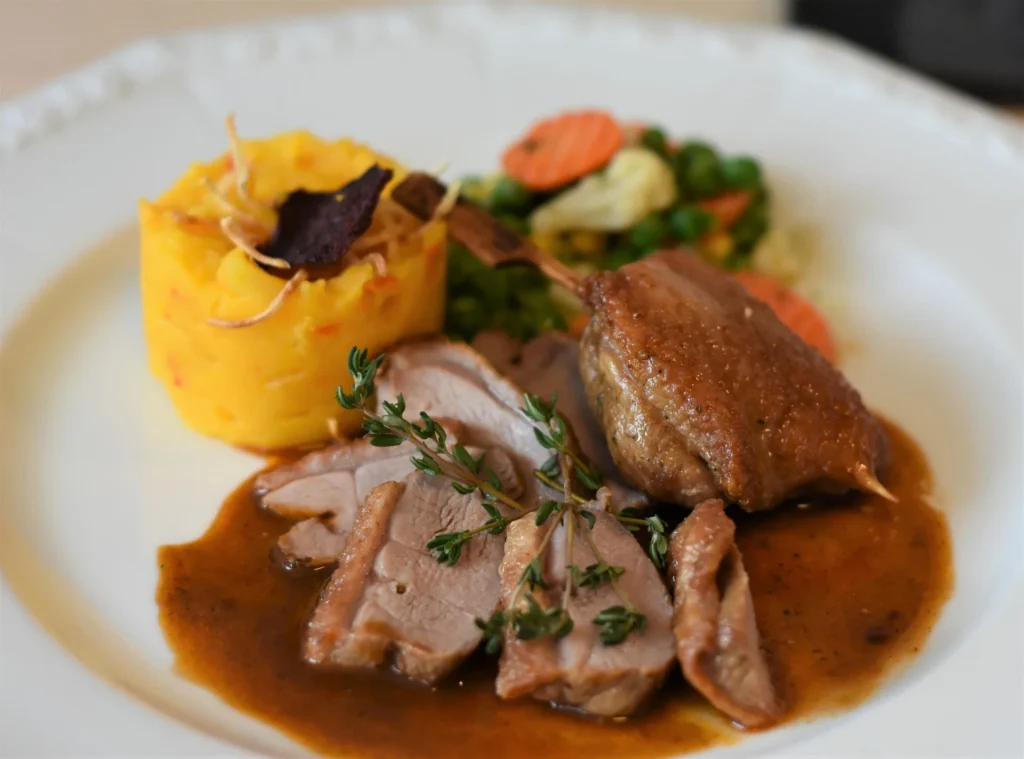
Magret can be dried or smoked. It can also be cut into fine slices, and cooked on a grill or in a pan. Magret is traditionally grilled or browned on the surface and rare at the centre, as for the cooking of a steak or beef roasting joint.
Good to know : In the historic region of magret, restaurant customers are not asked to choose the cooking level of their magret. One can also distinguish magret from fillet or simple duck belly, thanks to this specification about force-fed duck.
History and characteristics of magret
Originally, duck was mainly cooked in Confit or as a stew. In this way, nothing was wasted. Although the origin seems ancient, duck magret is a recent creation. Indeed, the duck of Sud-Ouest France is traditionally cooked as Confit de canard, in Garbure or roasted whole.
The chef from Gers, André Daguin invented the Magret. He was head chef of the gastronomic restaurant Hôtel de France in Auch. In 1959, he created and promoted a new way of preparing duck fillets. Then, in 1965, he cooked the Magret like a steak with a green pepper sauce, under the Frenchified name of “maigret” or “Lou Magret à la braise”. Subsequently, the Gascon word “Magret” became established and has since become one of the emblematic recipes of French gastronomy.
How to cook Magret?
Magret can be cooked in a thousand and one ways: on the barbecue, on a griddle, in the oven, in a wok, or even in a pan for a more classical version. It is served with sauces such as pepper sauce, Roquefort sauce, but with a little touch of honey. When you prepare a duck Magret, it is preferable to collect the juices at the end of cooking, then deglaze them with wine.
When cooking the Magret, it is recommended to preserve the layer of fat surrounding it, then reduce during cooking. Season the duck Magret with salt and pepper, then sear it in butter over high heat or on the grill. Continue cooking over low heat or at medium temperature (180-200°C). The Magret is also enjoyed dried or smoked, with a few baked potatoes and it is a real treat !