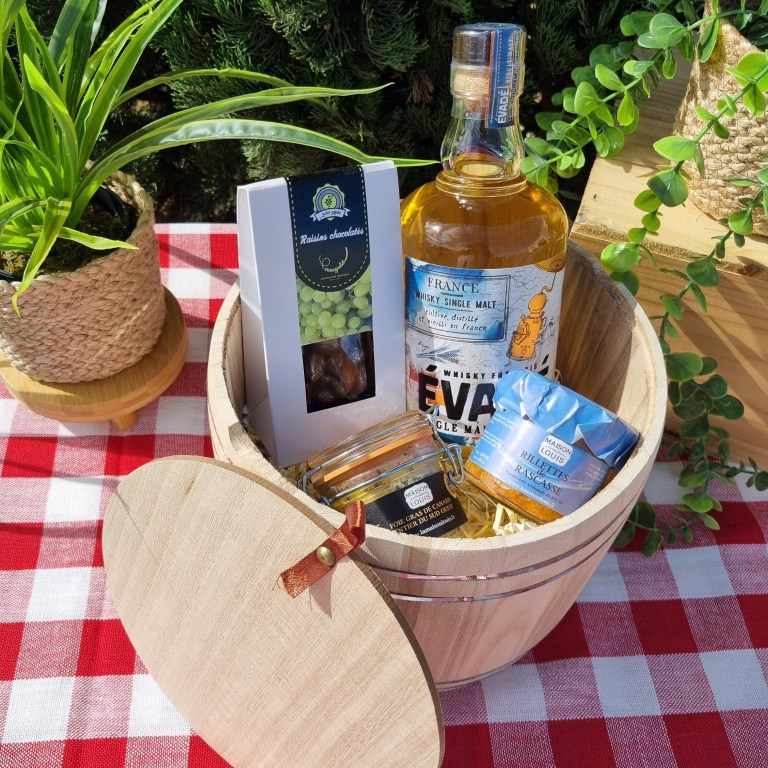



Charcuterie refers to methods of preparing foods based principally on pork raw or cooked and often salt as a preservative. In France, a charcuterie designates two types of commercial establishments, namely: an establishment that sells charcuterie preparations elaborated in a workshop owned by that same establishment, or an establishment that sells charcuterie preparations bought at wholesale or semi-wholesale prices.
What is charcuterie?
Charcuterie is a range of dishes obtained after meat transformation. It is essentially based on pork, but there are also charcuteries based on game (wild boar, rabbit for pâtés and sausages) and poultry (turkey, chicken, duck). There are three main types of products: salt-cured products (without cooking, hams, cured sausages, chorizo), cooked products (cooked hams, pâtés, Rillettes, black pudding, andouille) and other products such as sausages to be cooked.
History of Charcuterie
The transformation of meat and offal into charcuterie products dates back to Antiquity. At that time, meat could not be preserved effectively without a cold source other than through salting and smoking. The Romans in particular practised a particular way of cooking meat, notably pork. Indeed, this meat lent itself well to salting and smoking. In Italy, the word “Salting” is said as “salumeria”. It is a derivative of the Latin word “sal”, the salt, whilst in Umbria, Tuscany and Rome, the term used is norcineria.
Guilds of pork butchers (merchants of more or less prepared charcuterie) were founded in France on 17 January 1476, acquiring their autonomy by separating the acquisition of meat from butchers on whom they depended (the privilege was granted in 1513).
Charcuterie in France
In France, each region has its own speciality of charcuterie: Rillettes, jambon persillé de Bourgogne, lonzu de Corse, Jésus de Lyon, sausages of Montbéliard, Jambon de Bayonne, andouille de Vire, etc. Raw or cooked, charcuterie appeals to many palates. As an aperitif, as a starter, at the barbecue or simply during a meal, charcuterie is an integral part of French diet. Almost all households (99.3%) purchase it, consuming on average 30 kg per year, with an annual budget of 303 euros. It must be said that consumers have a wide range of product choices. France offers 450 charcuteries made from raw, cooked, salted, smoked or even preserved meats, in addition to charcuterie and cured meats from abroad, with turnover estimated at 6.7 billion euros.
Ham is top of the ranking of the most consumed charcuterie products in France. They alone represent almost a quarter of national charcuterie consumption. Next come coarsely chopped sausages, lardons, belly and bacon, dry sausages, fine paste sausages and pâtés. At the bottom of the ranking are poultry charcuterie products with only 6% of total consumption, dry hams (4%) and black pudding (3%).